Friendship and teamwork
Kids get better at math together. Mighty Mathletes is designed so the fastest way to win is often to help someone else.
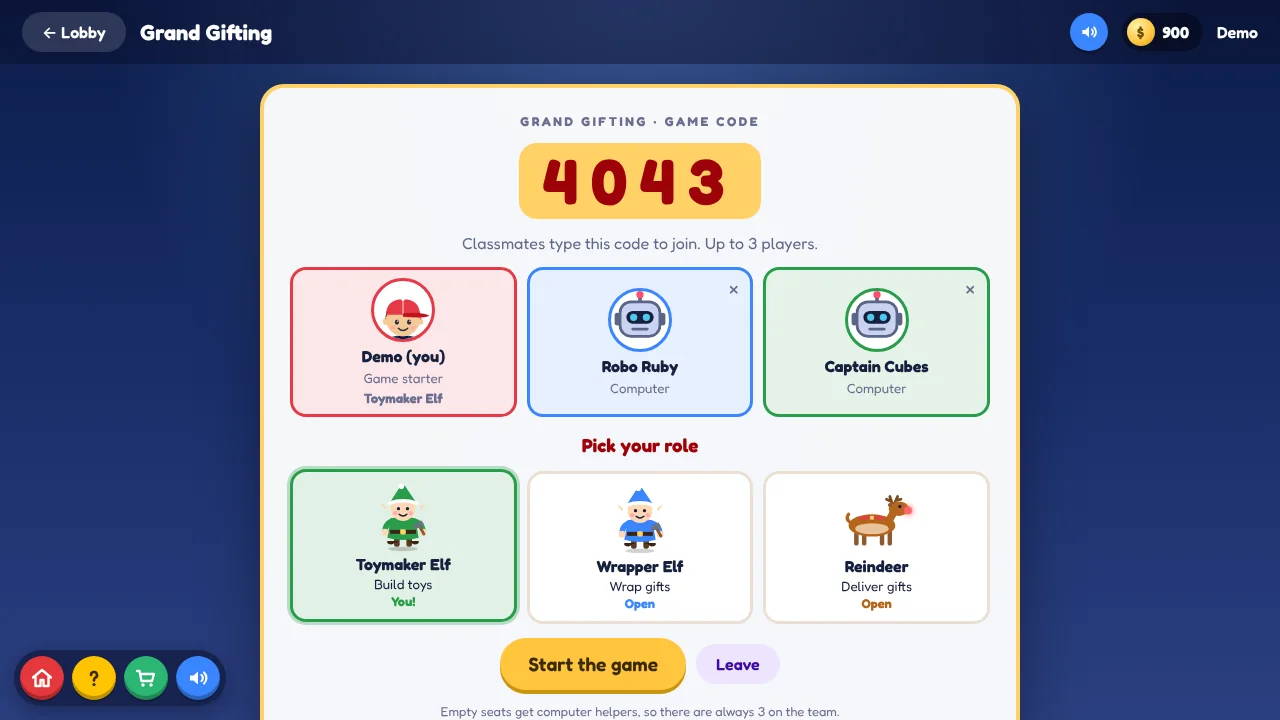
In Grand Gifting, nobody wins alone
Three players share one workshop. Each answers facts at their own station, and every station depends on the one before it. When a gift is delivered, everyone on the team is paid.
Toymaker elf
Three right answers build a toy.
Wrapper elf
Two right answers wrap it and load the sleigh.
Reindeer
Three right answers fly it out to a house.
Everyone gets paid
Each delivery pays all three players.
Kids quickly notice that a stuck wrapper slows the whole team, so they cheer each other on, trade roles and celebrate together. That is the point. Research on classrooms consistently finds that cooperative goals, where students succeed together, are linked with both higher achievement and more positive relationships than competitive or solo goals.
Kind by design
Every social feature was built with the question “what could go wrong for a kid?” in mind.
Classmates only
Friends are added by full name from your own class (or family), and both kids have to say yes. There’s no searching for strangers.
No open chat
There is no free-text messaging anywhere in the program, so there’s nothing to moderate and nothing to hide.
Nobody gets left out
Every multiplayer game can fill empty seats with friendly computer players, so a child who’s alone, or who joins late, still gets to play.
Productive waiting
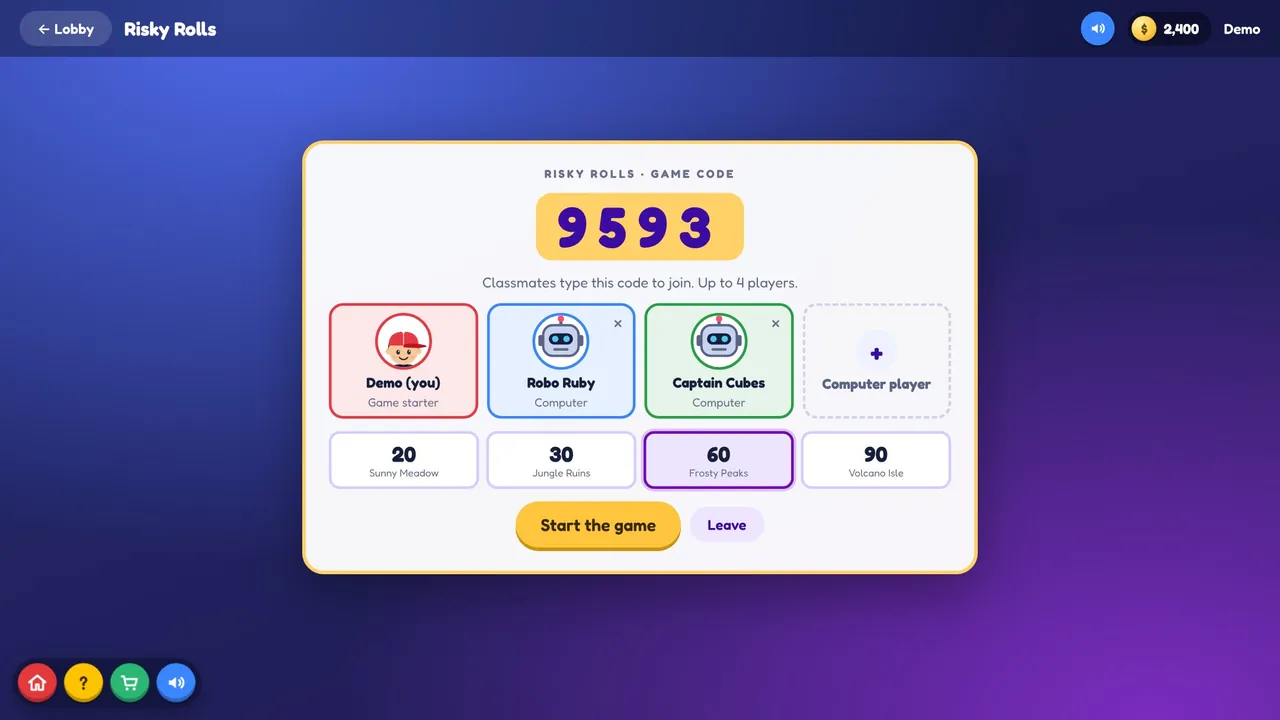
In Risky Rolls, players practice facts while they wait for their turn and still earn MathBux, so waiting never turns into boredom.
Celebrate personal bests
Records, streaks, trophies and the STAR Society reward each child’s own progress, not just who’s at the top.
Grown-ups decide
Teachers and parents can turn off the friends list or multiplayer, require today’s practice first, and shut down any live game in one click.
Social skills show up in the reports too
The student summary teachers and parents read includes a social section: how many friends a child has, whether they join multiplayer games, how often they team up, and how they spend the MathBux they earn.
If multiplayer is turned off for a class, the summary says so instead of counting it against the child. And a child in their first week isn’t flagged for having no friends yet.
Research behind this approach
- Roseth, C. J., Johnson, D. W., & Johnson, R. T. (2008). Promoting early adolescents’ achievement and peer relationships: The effects of cooperative, competitive, and individualistic goal structures. Psychological Bulletin, 134(2), 223–246. Read it
- Durlak, J. A., Weissberg, R. P., Dymnicki, A. B., Taylor, R. D., & Schellinger, K. B. (2011). The impact of enhancing students’ social and emotional learning: A meta-analysis of school-based universal interventions. Child Development, 82(1), 405–432. Read it
- Ryan, R. M., & Deci, E. L. (2000). Self-determination theory and the facilitation of intrinsic motivation, social development, and well-being. American Psychologist, 55(1), 68–78. Read it